

Temple Mount now a galvanizing site for religious Zionism
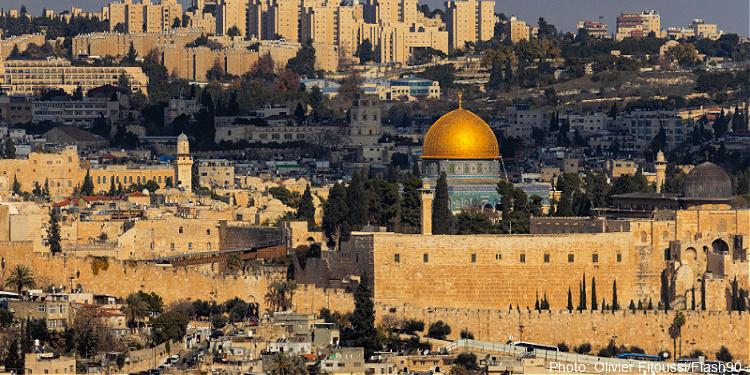
The Temple Mount in Jerusalem has shifted from a site of Jewish radicalism to a more politically moderate pilgrimage site with a greater role in religious Zionism, Isaac Hershkowitz writes in the journal Modern Judaism (February). For a long time after the destruction of the Jewish Temple in 70 CE, the Temple Mount had been a relatively marginal symbol of Jewish longing. That changed after the Six-Day War in 1967, when activist groups reframed the mount as a holy site of messianic fervor and epicenter of Jewish sentiment. Protest prayers were often made at the Temple Mount by Likud youth factions, with some plotting to destroy the Muslim Dome of the Rock. Until recently, Israel’s spiritual focus had more often been on the Western Wall, which emerged as a venerated holy site. But that has changed in recent years as more mainstream religious Zionists, who accept liberal and democratic values but have a “growing sense of messianic anguish,” have been seeking a deeper connection to the Temple Mount, especially as Jewish sovereignty over the site has been not only “unrealized but increasingly eroded,” Hershkowitz writes.
Moderate rabbis have joined more hardline ones in their veneration of the Temple Mount, with now more than half of Israel’s Zionist training schools and key religious high schools regularly ascending it. “This rabbinic push, veteran and new, rejects conquest for presence, bolstered by figures like Yehuda Glick lending religious and rights-based calls…[Ascent] is now Religious Zionism’s rabbinic heartbeat, not its fringe.” Analyzing visits to the Temple Mount since 2003, when it was reopened to Jewish visitors, Hershkowitz finds a dramatic increase in the number of ascenders, with participants tending to be younger than the demographic average in Israel. Over a 15-year period, the number of ascenders has increased tenfold, even taking account of dips during 2020 and 2023. Newly available 2025 data “already indicates a significant increase in the number of ascents, with a rate of growth that is accelerating both rapidly and substantially.” [The article, it should be noted, does not account for the many evangelicals who may be ascending, seeing the Temple Mount as a key site of biblical prophecy.] Hershkowitz concludes that the exhaustion of prior objectives, such as gaining settlements and footholds in parts of the land and reshaping the map of Israel to render a return to the 1967 boundaries, “explains why the ascent to the Temple Mount and the political and religious struggle for Jewish sovereignty and prayer rights upon it are likely to constitute one of the central objectives facing Religious Zionism in the coming decades.”