

Protestant postliberalism’s disappearing act in seminaries and what comes next
Protestant “postliberalism,” marked by its critique of liberal theology, is a diminishing presence in mainline Protestantism, leaving the field open for postcolonial and liberationist theologies to dominate seminaries, writes Dale Coulter in his newsletter The Protestant Mind (August 11). The theology emerged in the 1970s and took off in the 1980s, with Yale becoming its unofficial headquarters, starting its decline only in the early 2000s. Two of Protestant postliberalism’s remaining major spokespersons, Stanley Hauerwas and George Hunsinger, are in their 80s, and even the younger theologians influenced by postliberal Protestantism, such as Katherine Sonderegger, Kathryn Tanner, Ephraim Radner, and Joseph Mangina, “represent the end of its influence as a distinct school of thought,” Coulter adds. He writes that it was a form of populism that challenged the prevailing wisdom of liberalism, rationalism, and scientism.
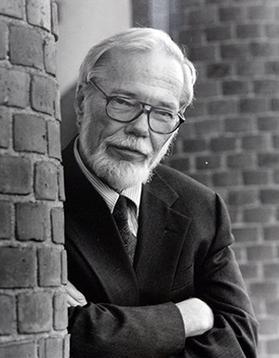
He writes that “The postliberal migration from a political and cultural descriptor to a theological one was seen as early as the 1970s under theologians such as Hans Frei and George Lindbeck [who argued for] pre-critical interpretations of scripture that took the biblical text seriously as a unified narrative rather than a patchwork of pericopes stitched together from different sources.” Probably the most significant impact of postliberal Protestantism was its preservation of an evangelical catholicism within the mainline, acting as the “last guardrail” against a loss of doctrinal orthodoxy. Coulter concludes that while there are important exceptions, three broad areas will likely dominate mainline seminaries: “Cultural theologies that encompass social ethics, liberationist, and postcolonial critiques of empire; relational theology, which is a newer category that moves from process theism to open theism; and comparative theologies that engage in an interdisciplinary analysis of the history of religions.”