

Pockets of revival in American Catholicism?
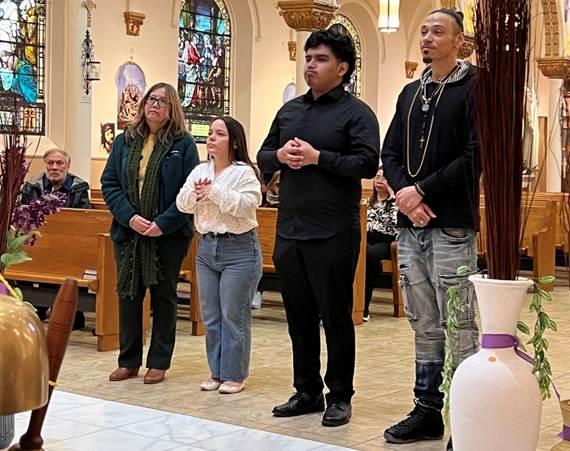
While talk of a national revival is seen as an exaggeration, church leaders and other observers are now claiming that “regional revivals” in American Catholicism are taking shape. This is exemplified in an article in the Catholic Our Sunday VisitorNews (March 17) that refers to “pockets of revival” in its reporting of “significant upticks in adults preparing to enter the Catholic Church this Easter.” Kimberley Heatherington reports that the high point of adults joining the Catholic Church in the U.S. was in 1999, when there were 172,000 adult baptisms and receptions. This was followed by a period of steady decline which now seems to be reversing, according to an expert in Catholic evangelization, Sherry Anne Weddell. “There was significant growth between 2023 and 2024,” Weddell says. While the data for 2025 and 2026 have yet to be published, “the numbers that are being reported are getting bigger and bigger,” although the most recent reports are anecdotal. The 2024 Official Catholic Directory reported that in 2023, 619,775 people entered the Catholic Church in U.S. Latin-rite dioceses. Of those new entrants, 77.6 percent were infant baptisms, 9.5 percent were baptisms of minors, 4.8 percent (29,752) were adult baptisms, and 8.1 percent (50,490) were receptions into full communion from another Christian tradition, which could include adults or minors. In 2024, adult baptisms and receptions (of adults and minors) increased again to 34,552 and 55,453, respectively, according to the 2025 directory.
These increases have been seen in some dioceses more than others. The Archdiocese of Newark, New Jersey, reports that 1,701 individuals are preparing to join the Church—a 30 percent increase since 2025, a 48 percent increase since 2024, and a 72 percent increase since 2023. Similar increases have been seen in the dioceses of Portland, Oregon, Cleveland, Richmond, Virginia, and Fort Wayne-South Bend, Indiana. In the long-declining Archdiocese of Boston, more than 680 catechumens plan to join the Church at Easter, an increase from last year’s 450 and previous years’ average of 250–300. Several of the diocesan representatives interviewed said that their increased numbers were not attributable to a post-Covid postponement of sacraments, as that time had passed. Heatherington adds that Catholic ministries on college campuses have been reflecting growth as well, including Texas A&M University, Notre Dame, and Arizona State University. “There may not be a revival across the country, but there are revivals,” said Patrick Krisak, the Archdiocese of Boston’s director of faith formation and missionary discipleship. “And at what point do all of those pockets of revival that we’re seeing all over the country add up to a revival?”
The popular Catholic prayer app Hallow did its own analysis of its data and confirms the significant rise in catechumens and candidates across the United States in 2026. Based on data compiled by Hallow from more than 140 of the 175 U.S. dioceses (more than 80 percent), dioceses are experiencing a 38 percent annual increase on average in individuals entering the church through the Order of Christian Initiation of Adults (OCIA). This includes both catechumens (unbaptized people preparing for full initiation into the church) and candidates (those already baptized who are entering into full communion through confirmation). The Pillar (April 4), a Catholic Substack newsletter, notes that the record number of people entering the church in 2026 is “a positive trend, but it still reflects a church in which the number of new Catholics is well below the number who entered the Church in 2000, or even 2015.” The record numbers of converts entering the church in 2026 is confirmed by a study by The Pillar based on diocesan data on catechumens and candidates. Among the 16 dioceses sampled, all had more people entering the church in 2026 than in 2024 and the “trend in these dioceses is certainly towards consistently large increases,” with the average increase since 2024 being 83 percent. But only two of the 16 dioceses had more new adult Catholics in 2026 than in 2000 —Newark and Washington, DC. Among the 16 dioceses examined, the average diocese had 31 percent fewer people entering the church in 2026 as compared to 2000. “If those dioceses prove to be representative of national trends,” the newsletter concludes, “2026 definitely represents a continuing increase in the number of converts since 2020. But it can be hard to understand what that means for the growth of the church in the long term. Even as the number of new adult Catholics is rebounding, the number of infant baptisms in the U.S. has continued to fall rapidly. Since 2000, the number of children baptized each year has fallen by more than 50 percent.”
(OSV News)