Peru and Colombia embrace Latin America’s populist and religious politics
The recent close elections of conservative populist candidates in Peru and Colombia suggest a new injection of Catholicism into polarized Latin American societies. Other Latin American countries, such as Argentina, Chile, and Ecuador, have also shifted right in recent years with populist candidates. Following weeks of ballot reviews and a narrow election margin in Peru, Keiko Fujimori emerged victorious over her left-wing contender. The Catholic Professional magazine (July 7) notes that Fujimori, the daughter of the late president Alberto Fujimori, is the first woman to be elected president and a “devout Catholic who frequently invoked Christian values regarding family and community solidarity on the campaign trail.” Campaigning on a platform of “order and hope,” Fujimori has promised a firm hand to combat the rising tide of crime and extortion, while making defense of Peru’s market-oriented economic model a priority. In a highly polarized country, with a strong leftist presence supported by the country’s poor and rural populations, “meaning her primary challenge will be to govern as a unifying consensus-builder rather than a confrontational partisan…Fujimori is uniquely positioned to view governance through the lens of Catholic social teaching, focusing on the common good, solidarity with the marginalized, and the promotion of human dignity,” the article concludes.
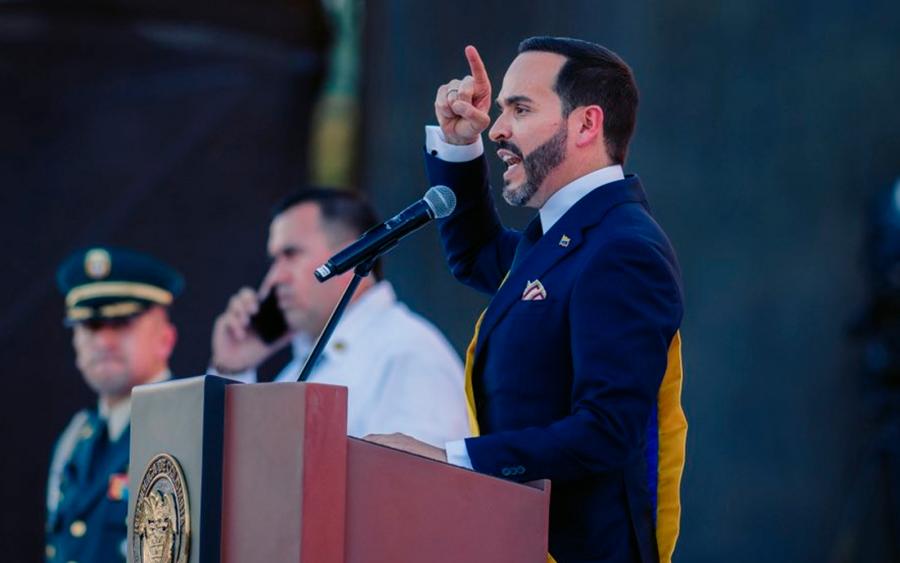
In Colombia, the election of Abelardo de la Espriella will shift the nation to the right after the leftist presidency of Gustavo Petro, although his narrow election also suggests that polarization on social and political issues continues. Hernan Restrepo writes in Christianity Today (June 22) that evangelicals, who make up 16 percent of the Colombian population, were a strong base of support for de la Espriella. The former atheist and now devout Catholic ended his victory speech by proclaiming “Christo Rey,” or “Christ is King.” Although there is no data on the percentage of evangelicals who voted for him, his campaign has rallied the support of Colombian megachurches and evangelical political parties and groups, although some claimed neutrality about the elections. César Caballero, of the polling firm Cifras y Conceptos, estimates that a majority of evangelical voters supported de la Espriella. Many were drawn to his promise of security, his embrace of conservative values, and his conversion to Catholicism. But a segment of younger evangelicals voted for his opponent Ivan Cepeda due to the latter’s proposals to negotiate peace with armed groups, his defense of the environment, and his support for historically excluded populations like Indigenous groups and Afro-Colombians. A recent Pew Research Center study found that 63 percent of Colombians cared about whether their president was a person of faith. In contrast to de la Espreilla, Petro is a non-practicing Catholic, while Cepeda has been private about his personal life and has not declared himself a follower of any religion.