

On/File: A Continuing Record of People, Groups, Movements, and Events Impacting Contemporary Religion
On July 16, the Global Nobel Laureates Assembly on Artificial Intelligence and Nuclear War culminated with the signing of the Rome Declaration, “Humanity at the Threshold: A Declaration on Artificial Intelligence and Nuclear Weapons.” Hosted by the Vatican at Borgo Laudato si’ in the Pontifical Gardens of Castel Gandolfo, the gathering was explicitly framed as an outworking of Pope Leo XIV’s encyclical Magnifica Humanitas, dedicated to safeguarding the human person in the age of artificial intelligence. Following other recent efforts at highlighting the risks posed by the ongoing AI and nuclear arms races, it was the first time that such a large and diverse gathering of scientists, experts, activists, and religious leaders addressed these issues in concert. Beside 30 Nobel Laureates, there were around 20 leading AI researchers and a roster of former heads of state among the 200 participants. The event is a significant data point in the cross-cutting story of religion and technology governance. A religious institution is here positioning itself not as a bystander to the AI debate but as a moral convenor of scientists, technologists and statesmen—using the vocabulary of “disarmament” to reframe AI safety as a spiritual and humanitarian imperative. Speakers repeatedly warned that coupling AI to nuclear systems raised the risk of catastrophe by accident or acceleration.
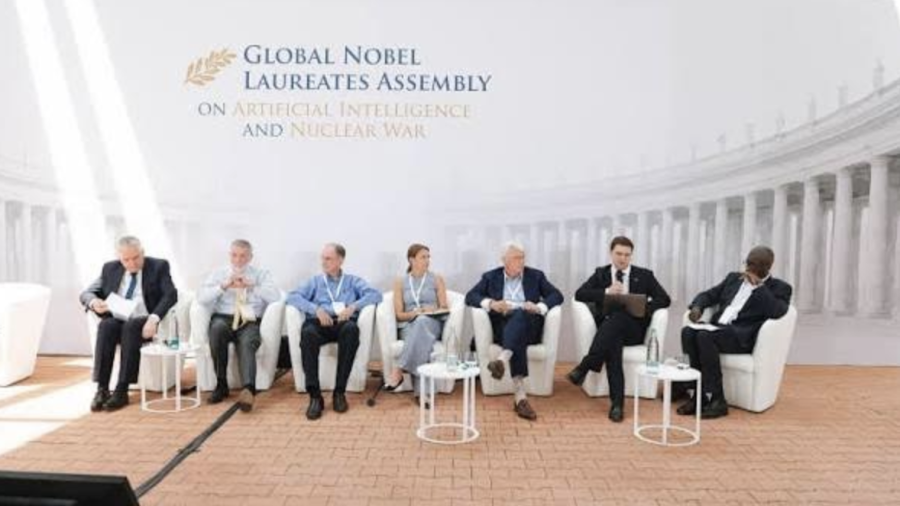
The text describes AI’s being embedded in nuclear systems as compressing or displacing human judgement in a crisis, enabling cyber-attacks against civilian and strategic infrastructure, and fueling information warfare that erodes the shared factual basis on which trust, verification and restraint depend. It also warns that advanced AI capabilities, computing power and data infrastructure are concentrating in a few states and corporations, producing asymmetries of power and weak incentives to cooperate. Cardinal Baldassare Reina, Vicar General of Rome, situated the appeal amid geopolitical instability and a crisis of multilateralism, insisting that no machine, algorithm or autonomous system belongs at the center of decisions on humanity’s survival, and that questions of life and death must stay under meaningful human control. Nobel physics laureate Brian Schmidt said that “the Vatican was able to convene a diverse group of thought leaders in a way that arguably would not be possible otherwise...I might reach a million people. But the Pope can reach 2 billion. That’s 2,000 times more than me.” Whether the Rome Declaration shapes policy or remains aspirational, it marks the Holy See’s bid, under Leo XIV, to make the protection of the human person against machine power a defining theme of his pontificate.
Source: Bulletin of Atomic Scientists, July 17; Vatican News, July 16; text of the Rome Declaration