

On/File: A Continuing Record of People, Groups, Movements, and Events Impacting Contemporary Religion
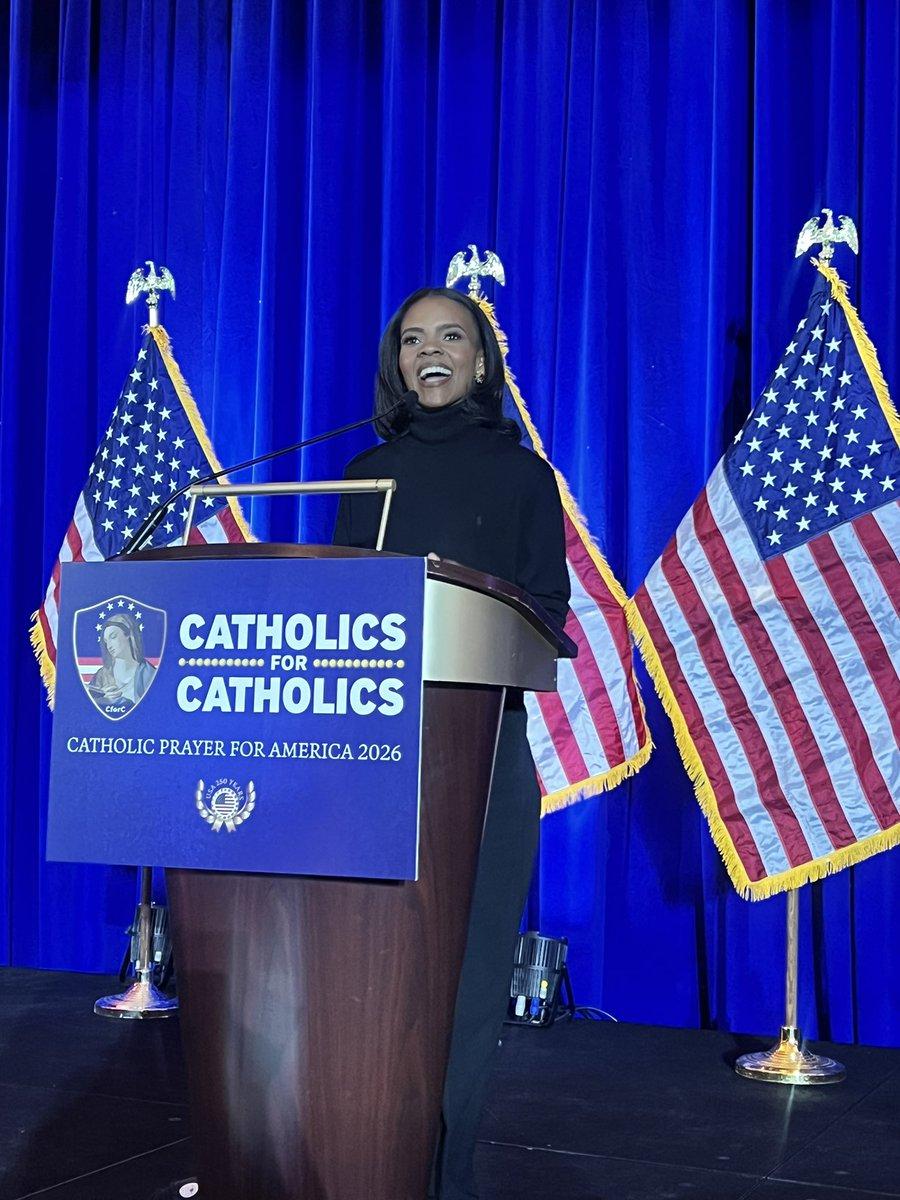
1) Catholics for Catholics has become a key organization for “America First Catholics.” The group represents more than just Catholics who support Donald Trump. Rather, it sits on the faultline between MAGA and a brewing network of conservative and traditionalist Catholics who are opposed to the pro-Israel stance of the Trump administration. Catholics for Catholics, started in 2022, aims to strengthen what it sees as the Catholic presence in the U.S. by restoring Catholic social teaching and defending the church against secularism. On its website, the group says it seeks to “establish the reign of Christ the King in our beloved homeland” and to restore Christian values to the country. It espouses Catholic integralist teachings, which seek to create a Catholic political order in the U.S. Its website also calls for Catholics to “resist Zionism,” while condemning anti-Semitism. Its recent Catholic Prayer for America gala in Washington featured Candace Owens, the controversial broadcaster and influencer who has drawn controversy for her anti-Semitic conspiracy theories, and Joe Kent, the director of the National Counterterrorism Center who resigned in late March for his opposition to the war in Iran. With a strong online presence, the group regularly calls out Catholic leaders for betraying the faith and showing a “deafening silence” on culture war issues. (Sources: Free Press, March 18; Catholics for Catholics website, https://cforc.com)
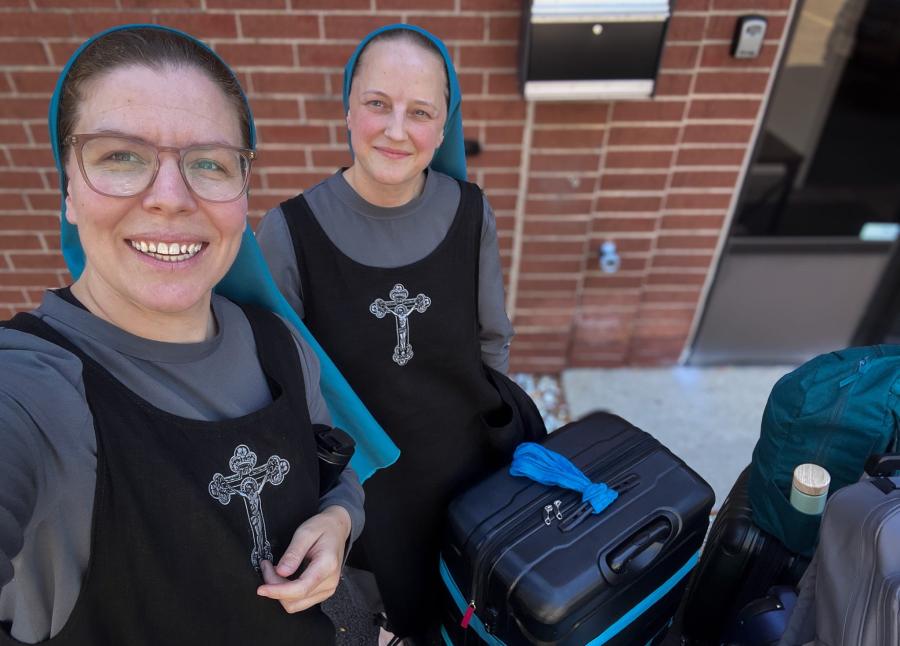
2) Two American Catholic sisters who experienced spiritual abuse firsthand have founded a new religious order dedicated to accompanying Catholics who have been hurt, scandalized, or driven away by the church's long-running abuse crisis, reports Maggie Phillips in The Dispatch (March 11). Sister Theresa Aletheia and Sister Danielle Victoria, formerly of the Daughters of St. Paul, started Sisters of the Little Way of Beauty, Truth, and Goodness in the Diocese of Lexington, Kentucky. Their explicit mission is “listening and solidarity with people on the fringes of the Church, especially those who have been wounded, scandalized, or abused by members of the Church.” In 2024 they publicly detailed their experiences of spiritual abuse (and, in one case, assault) by a popular priest who served as their spiritual director. After their claims reached the Vatican, Rome’s response was limited: the priest was suspended from offering spiritual direction for five years. Further accusations against him have since emerged from another female order. Rather than withdraw into bitterness or simply leave the church, the two sisters drew on their communications backgrounds to create Descent into Light, a podcast series released in 2025.
The series uses their own story as a lens through which to examine the institutional and cultural conditions that allow abuse to take hold—conditions found in secular organizations as well as religious ones. The sisters’ longer-term ambition is to build what they call a “digital monastery,” consciously inspired by the great Benedictine abbey of Cluny, which in the 12th century combined spiritual depth, reforming energy, and cultural creativity. They envision a physical mother house that would serve as a place of healing for abuse survivors, as well as a center to produce content on faith and harm. Their audience includes not only those who have left the church entirely but also the large and often overlooked population of Catholics who have stayed, carrying wounds and reservations alongside their faith. Disaffected Catholics already have ex-Catholic podcasts (Leave, Laugh, Love) and the r/excatholic subreddit. But there are few spaces by and for practicing Catholics that openly discuss abuse or spiritual manipulation. The two nuns see their order not as frontline “players” against abusers, but as “coaches” helping the church identify cultural weak points. They hope to purchase a mother house in 2026, with a view to accepting up to five new members by 2027. (Source: Website of the Sisters of the Little Way, https://www.sistersofthelittleway.com)
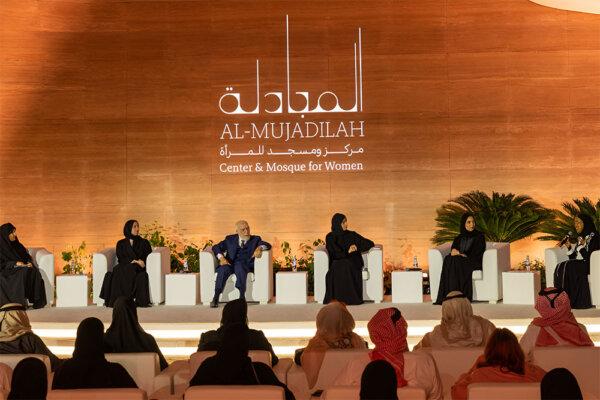
3) Inaugurated in 2024 by prominent Qatari royal and philanthropist Sheikha Moza as the Middle East’s first women-only mosque and the first purpose-built contemporary women’s mosque in the larger Muslim world, Al‑Mujadilah mosque in Education City, Doha, Qatar, plays a symbolic and spiritual role that is not limited to worship. The mosque is presented as a highly visible, contemporary, and strongly institutionalized project, in an iconic building. It includes a community center and public programming. Women interviewed by Al Jazeera journalist Ruby Zaman emphasize that the space “fosters personal and religious growth for a woman” and overcomes the restricted resources available for women to live their religion. Zaman’s report frames her visit around what the space “means to Muslim women,” particularly in the holy month of Ramadan.
Women describe the mosque as a welcoming hub for prayer, reflection, study, and community connection in a comfortable, female-centered environment free from mixed-gender dynamics. Overall, the women’s responses portray the mosque as a liberating and supportive space that enables them to engage more fully with their faith, learn, and connect with other women, and as a step toward greater inclusion and empowerment in religious life. Al‑Mujadilah is more than a prayer hall. From January 31 to February 2, it hosted the second Jadal Summit, with the theme “Muslim Women Navigating Theology, Ethics, and Society.” Aspiring to be a place for holistic spiritual and social growth, the center offers a range of learning opportunities for Muslim women of all ages and backgrounds. These combine traditional Islamic knowledge with contemporary issues, personal development, and community building. Al-Mujadilah is seen as “a prototype for future activities” promoting the role of women in religion and society. (Sources: Al Jazeera, March 1; New Age Islam, February 14; Al-Mujadilah website: https://almujadilah.qa/en)
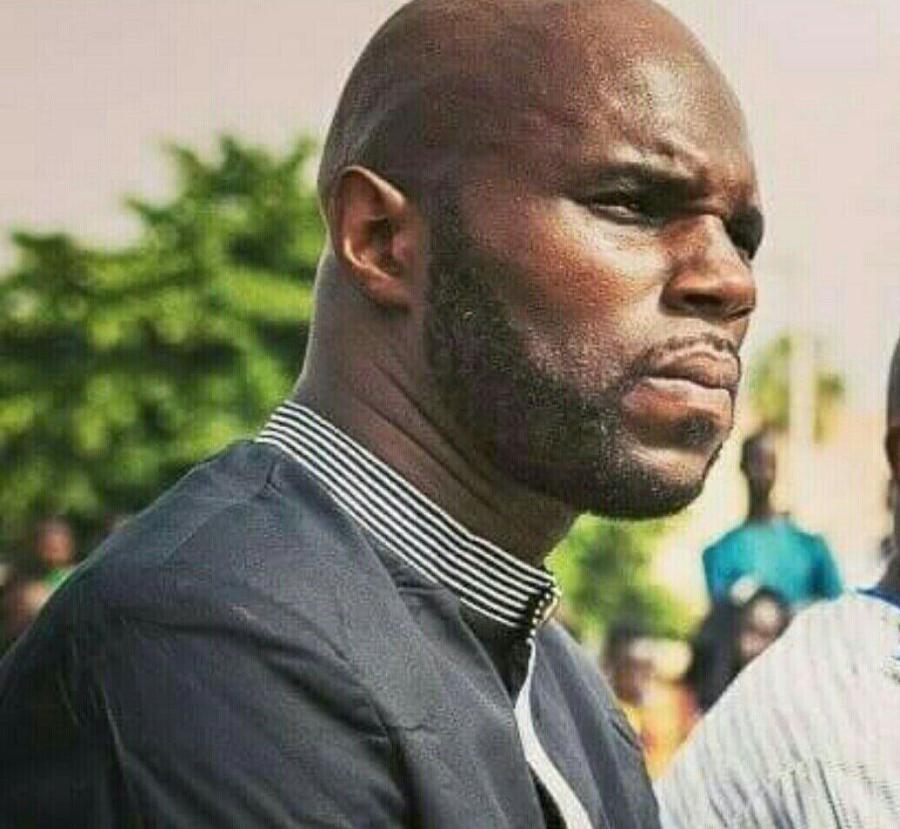
4) The Pan-African “influencer” Kémi Séba is applying the “Traditionalist” framework, which teaches that there is a common mystical core to all the world religions, to Africa. He identifies the deceptive “progress” of modernity with the West and primordial virtue with Africa, the birthplace of humanity. Born in 1981 in France, Séba first came into public view as leader of the “Tribu Ka” (Ka Tribe), a Black Nationalist organization that was dissolved by the French Council of Ministers due to its anti-Semitism. Séba was subsequently imprisoned for reconstituting the group, and it was in prison where he converted to Islam and discovered the work of Traditionalist writer René Guénon. Upon moving to Senegal in 2015, he founded an NGO, Urgences Panafricanistes (Pan-Africanist Emergencies), and became well known on social media. He is reported to have been expelled from Senegal, Ivory Coast, and Guinea, and, with his French citizenship revoked, he has recently been active in his parents’ country of origin, Benin.
He was blamed and charged for involvement in a failed 2025 coup attempt there, but has been running as a candidate in the country’s 2026 presidential election. His book, Philosophy of Fundamental Pan-Africanity, argues that the true “war of the worlds” is between traditionalism and modernity, with the “global black population” acting as the guardian of the “first tradition.” He writes that what is needed is a “globalized quilombanité,” an African-based culture to replace globalized neoliberalism. To achieve all this, a metaphysically based sociology based on tradition and a geopolitics challenging Western global dominance are required. There is little Islam in the Philosophy of Fundamental Pan-Africanity. His work and talks have been well received on such sites as Amazon.fr and YouTube, with his talks on YouTube attracting 550,000 views. (Source: Traditionalists blog, March 8)
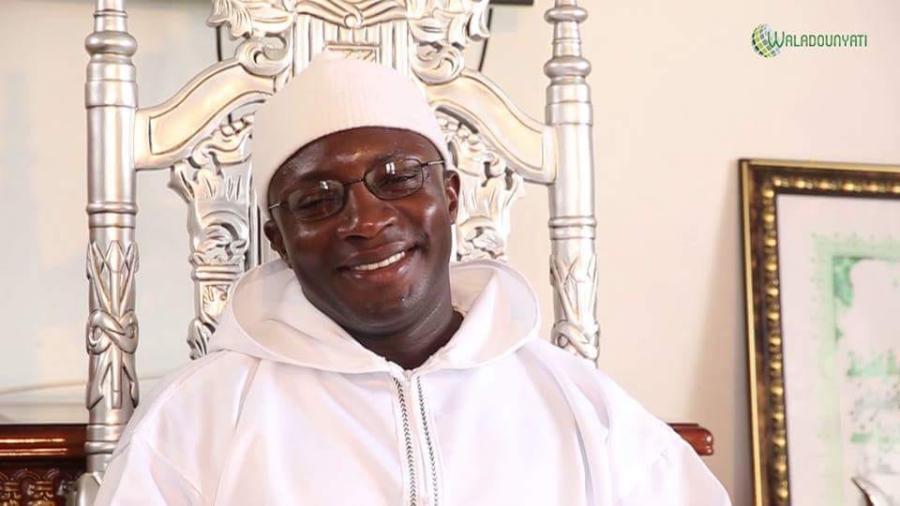
5) El Cheikh is a self-proclaimed Mahdi, a messianic figure in Shia Islam, who is gaining a wide following in Senegal among youth. The 43-year-old Cheikh said he received a series of mystical experiences and visions that led him to start a mystical Sufi order and subsequently confirmed his role as this prophetic figure who is believed to bring salvation to a world corrupted by the Dajjal, the embodiment of evil. In 2019 he performed his first pilgrimage to Mecca, where he announced that his spiritual mission would begin in 2022, and he has since been said to perform miracles. El Cheikh’s claim to be the Mahdi is unique in Senegalese Sufi Islam, since leadership is usually passed down through lineage and succession within prominent Senegalese families. In contrast, El Cheikh is said to “leverage the perceived weakening, disunity, and latent rivalry in traditional Sufi groups as a means of bolstering his legitimacy, presenting himself as a unifying figure capable of resolving divisions.”
He and his followers have strategically used mass communication platforms, including radio, television, and social media. While still in its early stages, the movement gathered around El Cheikh appears to be well-structured, with specialized teams managing its operations and growth. His violation of traditional Sufi succession rules as well as his limited resources in a poor country have led critics to doubt that he could establish the global dominance that could enforce an Islamic state. But even if El Cheikh remains a national phenomenon, he has created a “significant social reality,” generating a considerable following and challenging existing religious structures, particularly the “traditional hierarchy of Islamic religion, both within the country and beyond.” (Source: Journal of Religion in Africa, February).