

De-secularizing the Boy Scouts?
While the Boy Scout movement has secularized and lost members in the last decade, more religious scouting programs have emerged in the U.S. and Europe, writes Christopher Motz in First Things magazine (June/July). The Boy Scouting movement had strong religious foundations from its beginnings in England, France, and the U.S., joining together “duty to God” with responsibilities to others and one’s country. In its American expression, the Scouting movement embraced religious freedom, “conviction without coercion, pluralism without relativism.” As recently as 2000, Motz writes that the Boy Scouts resisted trends that legally challenged its traditional religious and moral positions, such as its refusal to allow atheist and gay members. That changed in 2013 when the Scouts reversed a 103-year-old rule proscribing open homosexuality among youth members and, a few years later, scoutmasters. Many members and scoutmasters saw this move as betraying the religious-based morals of the organization and left, according to Motz. Since 2015, U.S. membership in the Scouts fell from 2.2 million to less than 1 million, despite opening its ranks to girls in 2018 (and changing its name to Scouting America).
The U.S. military has had a special relationship with Scouting, and current Secretary of War Pete Hegseth has attempted to revive the organization along martial and traditional moral lines.
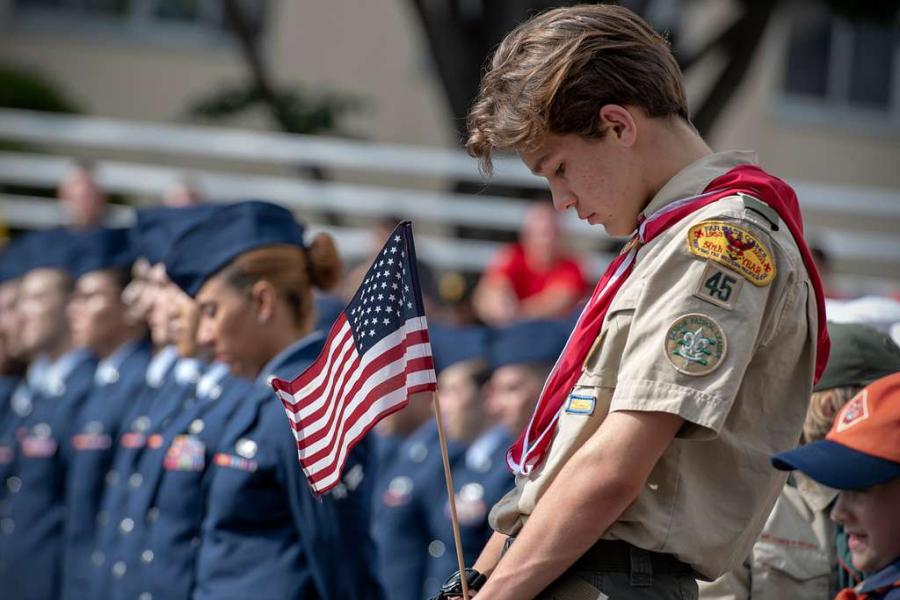
Although on a smaller scale than Scouting America, scouting alternatives inspired by its founder Robert Baden-Powell are growing, Motz writes. Religious families have founded faith-based scouting groups, such as Trail Life USA, Troops of St. George, and the Federation of North American Explorers. In Europe, the Scouting movement still serves as a “stronghold of religious youth formation. Increasingly, moral formation is provided by institutions that are unafraid to exercise the freedom to impose moral and religious standards” secured by earlier court decisions that turned back liberalization in the older Boy Scouts organization, Motz writes. He concludes that even though he is uncertain that Scouting America’s “reserves of religious and cultural capital” can be replaced quickly at scale, many parents see their local Scouting troops as still maintaining traditional moral and religious standards.