

Data wars over anti-Christian violence in Nigeria
Sources of data and research methodologies concerning anti-Christian violence in Nigeria have become a bone of contention between religious freedom advocates and secular academia, the media, and humanitarian workers in the West, writes Dennis Petri in his Substack newsletter Five4Faith (April 17). Statistics most often cited by advocates against religious discrimination and violence in Nigeria, including President Donald Trump, belie the claim of anti-Christian genocide, even if there is strong evidence of religiously targeted violence, Petri writes. He adds that the strongest anti-Christian framing comes from a single Nigerian civil society organization, Intersociety, whose reports have been amplified by politicians and a wide range of religious advocacy groups. Mainstream media outlets have pointed out that Intersociety publishes striking numbers without transparent sourcing, while the rhetoric accompanying these figures often “goes further than any data can support,” leading to a contentious debate on this issue.
Petri argues that Intersociety’s numbers are not reliable because they are based on untraceable aggregate death tolls. The group puts these data into circulation and political figures then cite them as fact, describing the violence as a “completed or ongoing genocide when the legal threshold for that term has not been met, and [perpetuating a] broader civilizational-erasure framing that presents Nigeria as evidence of a planned extinction of Christianity.” Petri adds that the Observatory of Religious Freedom in Africa’s (ORFA) incident-level data is the necessary corrective to Intersociety’s approach. “By tracking attacks on religious communities directly, ORFA makes the pattern visible that aggregate displacement figures erase,” he writes. But critics, often in the mainstream media, academia and humanitarian circles, have gone too far in the other direction, drawing the conclusion that there is no credible proof of religiously targeted violence at all, and that the conflict is best seen as a dispute about land and water driven by climate change and demographic pressure.
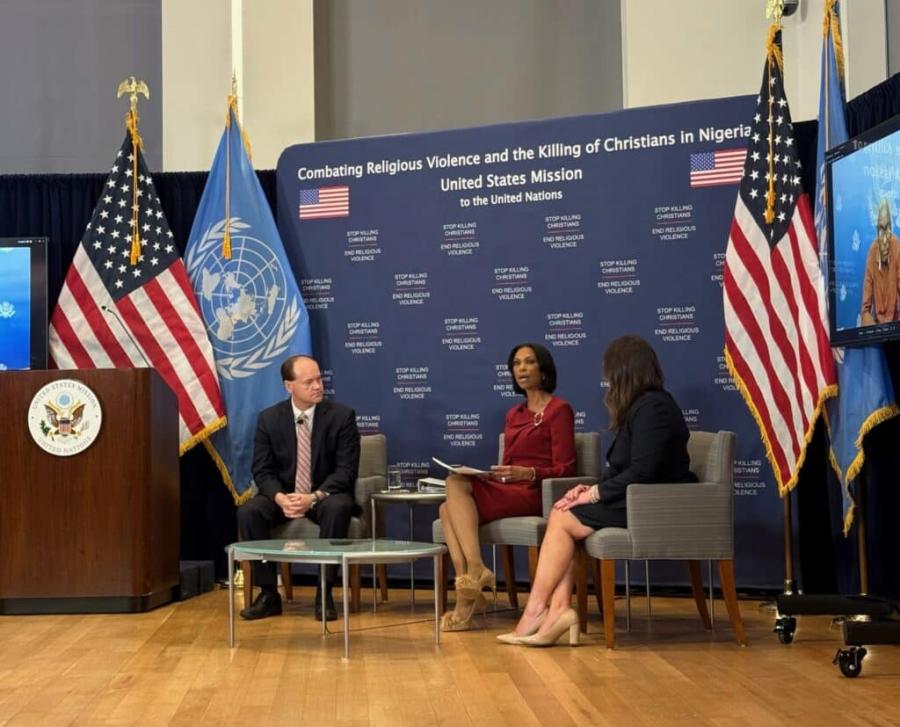
However, the resource-competition model doesn’t account for the geographic consistency in which villages are attacked, which buildings are targeted, and which community leaders are killed. “If this were purely a resource conflict, we would expect attacks distributed more evenly across farming communities regardless of their religious composition.” Petri cites data from ORFA that show a pattern of direct targeting that tracks religious identity in ways a resource model cannot explain. “When churches and church gatherings are attacked at rates that far exceed the presence of Christian communities in the population, and when that pattern holds consistently across regions and over time, the evidence of targeting is in the pattern itself,” Petri writes. He concludes that applying data from sources such as ORFA to the Nigerian conflict is a necessary corrective to both the genocide proponents and their detractors, who are often unaware of these sources and “have not historically treated religious identity as a structuring factor in conflict.”