

CURRENT RESEARCH

A new study of multi-religious identity shows that up to 60 percent of Americans believe in more than one religion. The study, conducted by Fenggang Yang and Joey Marshall and published in the Journal for the Scientific Study of Religion (online in June), used new measures on multi-religiosity, allowing it to capture religious identity, belief, belonging, and practice beyond one religion. Yang has found that these measures are more sensitive in showing multi-religiosity in East Asian countries where there have long been non-exclusive types of religion. In the current study, Yang and Marshall used an online questionnaire drawn from research panel pools and a split-sample experiment, with one sample group answering the new questions designed to measure multi-religiosity and the other sample group answering conventional questions.
Using the new inclusive questions on religious belonging, only 5.5 to 7.5 percent of respondents self-identified as belonging to two or more religions. In comparison, significantly higher proportions of East Asians hold multiple religious identities (as seen among 18.8 percent of Taiwanese and 43.5 percent of Koreans). But when it comes to belief, among respondents from the U.S. general population those selecting two or more religions in which they believed “somewhat” or “very much” reached about 60 percent. This was unexpected, since the same measure in Yang’s earlier survey of international students at American universities only reached 35 percent. The researchers conclude that “many Americans may have taken a cognitive step toward believing in other religions.” They add that believing in multiple religions has long been a challenge to missionaries and evangelists in East Asia. “Our findings show that this challenge is probably no longer exclusive to Asians or Asian Americans but also affects non-Asian Americans.”
Journal for the Scientific Study of Religion
Almost one-fifth of psychedelic users report either direct or indirect experiences of “black magic,” according to a new study reported in the Substack newsletter, Ecstatic Integration (June 12). The study of 895 respondents, which defined “black magic” as experiences of harm or coercion through non-materialist processes, such as love magic, spiritual attacks, curses, hexes, or sorcery, was conducted by Professor David Luke of Greenwich University; Kim van Oorsouw, assistant professor at Maastricht; Maja Kohek of ICEERS; Christian Jurlando of the Stevens Institute of Technology; and Jules Evans and Marta Majer from the Challenging Psychedelic Experiences Project. The majority of the respondents (85 percent) reported personal recreational or exploratory use of psychedelics, while 60 percent had participated in a ceremony or retreat, 24 percent identified as psychedelic guides, 22 percent as psychedelic-assisted therapists or clinicians, 18 percent as researchers, academics, or students, and 9 percent as psychedelic church members. The most common setting for psychedelic use was private or social (71 percent), followed by ceremony with a western guide or neoshaman (38 percent), ceremony with an indigenous shaman (21 percent), festival or nightclub (20 percent), and clinical settings (6 percent). About 15 percent of the respondents belonged to an ayahuasca church, group, family, or regular ceremonial circle.

The study found that 12 percent of psychedelic users in the survey reported personal experiences of black magic, and 6 percent reported knowing someone else affected by it. The figure was higher among those who said they regularly used ayahuasca and were part of ayahuasca groups: 33 percent of them said they experienced black magic, “which suggests belief in and experience of sorcery is widespread among western ayahuasca users.” The study found that psychedelic experiences made users more inclined to believe in supernatural healing, and around 52 percent of psychedelic users were found to believe in black magic, which is significantly higher than the roughly 25–30 percent of Americans or Europeans who said they believed in curses in previous surveys. The prevalence of beliefs in curses in psychedelic culture is closer to the levels found in East Asia and Latin America. This is surprising considering the high level of education in the sample, with over 60 percent reporting a master’s degree or higher. The belief that the shaman and facilitator of ayahuasca groups possessed supernatural powers was held by 43 percent of respondents, which can either have positive or negative effects. “This double-edged awe / fear of facilitators’ or shamans’ supernatural powers can have social consequences within psychedelic circles—[such as] a fear of speaking out against harms and abuses,” Jules Evans writes.
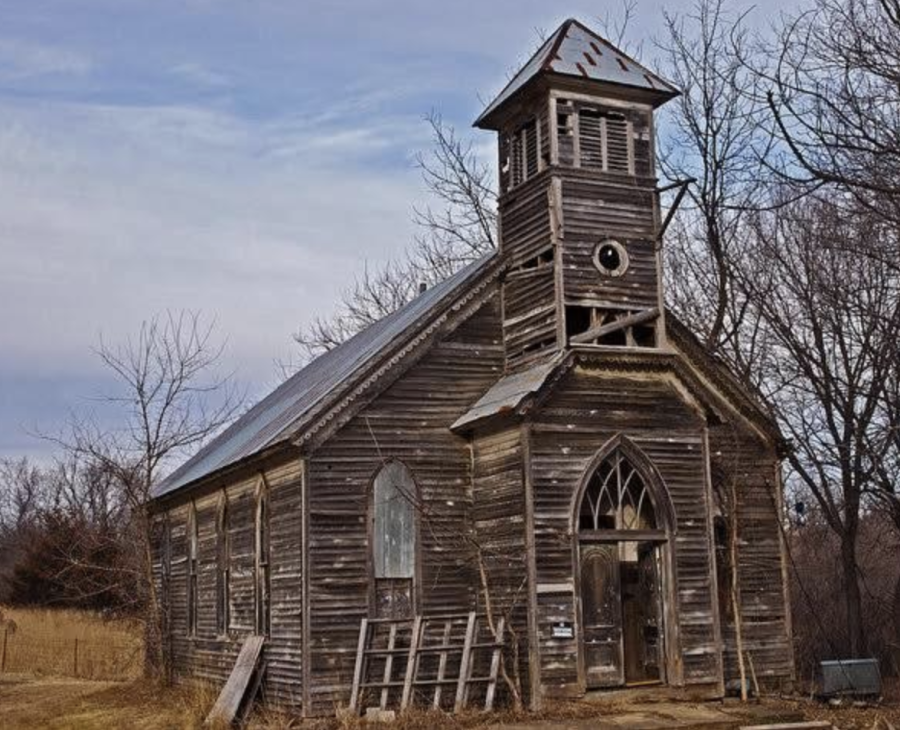
In a study of religious attendance across U.S. geographic regions, Ryan Burge finds that growth in the proportion of “never attenders” has spread to include rural areas, as well as African Americans in cities. In his Substack newsletter Graphs about Religion (June 29), Burge looks at religious change from 1972–2022 and shows that the share of Americans never attending services has grown to about one-third, even in rural areas. In 1972, only 10 percent of rural Americans never went to church, while it is about 31 percent today. Burge notes that it took rural areas about a decade to catch up to the secularization of other areas, but that now they have. The most godless geographic regions are the suburbs (smaller metro areas), though not by much—and rural areas are not that far behind everybody else in secularism. Among the Zoomers generation, the most secular were young people in rural areas. Burge also notes how secularization has seriously impaired the black church in cities. In 1972, black Protestants had a larger presence in urban areas than mainline and evangelical Protestants combined and were basically the same size as Catholics. Today, only five percent of urban Americans are black Protestants, while those other Christian groups have held steady.
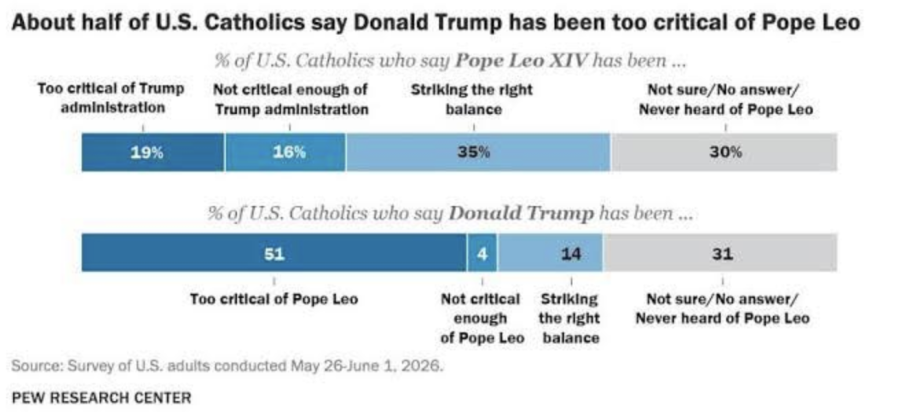
About 8-in-10 U.S. Catholics (78 percent) have a favorable view of Pope Leo XIV, only slightly lower than in the early months of his papacy, according to a new Pew survey. The share of Catholics who have a positive view of Leo is similar to the favorable sentiment surrounding his predecessor, Pope Francis, during the last years of his pontificate. The survey was conducted in late May, when there was tension between Leo and President Trump over the war in Iran. When surveyed about the pope’s critical attitude to the Trump administration, American Catholics were divided. While 19 percent said that Leo had been too critical of the Trump administration, 16 percent said he hadn’t been critical enough. But 35 percent said that Leo was striking the right balance (with about 30 percent unsure or having no opinion). Meanwhile, respondents’ attitudes toward Trump and his criticism of Leo were more negative, with 51 percent saying he was too critical. Four percent, on the other hand, said that he hadn’t been critical enough of the pope, while 14 percent said that he was striking the right balance. Catholic Republicans were more divided on the matter, with a third agreeing that Trump had been too critical of Pope Leo, and 39 percent saying Leo had been too critical of Trump.
A Pew article about the survey
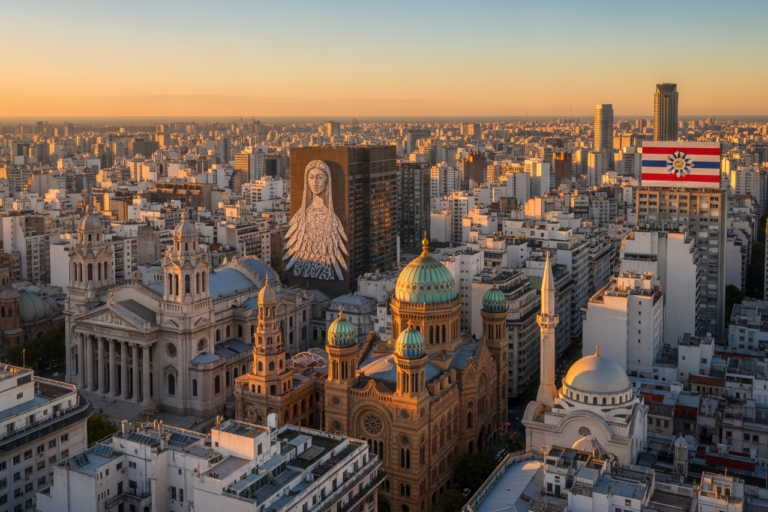
Argentina is undergoing a profound transformation of its religious map, according to the Barómetro de las Religiones y las Creencias en Argentina, a survey conducted by the Observatorio de las Creencias (OCREAR) at the University of Buenos Aires (UBA). The findings, reported by La Nación (June 1) and Infobae (June 2), are drawn from a national probability sample of 904 respondents surveyed between February and March of 2026, with a confidence level above 95 percent. The study’s central finding is that Argentina remains broadly believing but increasingly non-practicing. While a large majority of Argentinians say they believe in God, regular attendance at religious services and structured devotional practices are declining sharply. The researchers describe this as a process of “religious deinstitutionalization”: faith persists, but increasingly outside churches, rituals, and traditional religious authority. Catholicism remains the majority confession at 57.7 percent, but this figure stands far below the 90 percent recorded in the mid-twentieth century—the last time the national census (1960) included a question on religion. The non-affiliated—including atheists, agnostics, and those who describe themselves as spiritual but belonging to no religion—now constitute 22.4 percent of the population, making them the second-largest group. Evangelicals, whose growth has been slow but steady, account for 17.4 percent, equivalent to more than 8 million people. These three groups together represent 97.5 percent of the population.
Other religious communities remain very small, with Umbanda/Afro-Brazilian traditions and Mormons/Jehovah’s Witnesses each representing 0.5 percent, Muslims 0.3 percent, and Jews 0.2 percent. The generational divide, the most telling indicator of future trends, can be seen in the fact that only 44.6 percent of young adults identify as Catholic, while 31 percent report no religious affiliation (although 23.6 percent now identify as evangelical). Among those over age 50, on the other hand, Catholicism retains a dominant position at 69 percent, with only 12.6 percent declaring no affiliation. As far as gender and education go, women show stronger institutional religious affiliation, particularly in the evangelical world (19.3 percent of women vs. 15.2 percent of men), while men are significantly more likely to report no religion (25.7 percent vs. 18.8 percent of women). Evangelicals are more concentrated among lower-educated sectors (22.5 percent), where religious communities serve social and material support functions, while the non-affiliated are proportionally more prevalent among those with higher education (27.9–28.5 percent). Geographically, Catholicism holds more firmly in the interior of the country (59.4 percent), while the Buenos Aires metropolitan area leads in secularization, with 26.1 percent of residents reporting no religious affiliation. The study’s lead researcher, Juan Cruz Esquivel, characterizes the overall trend as the end of Catholic hegemony and the consolidation of a pluralized religious field defined by diversity, deinstitutionalization, and growing individual spirituality—a trajectory the report considers is unlikely to reverse.

A new study shows that about half of Denmark’s young adults under the age of 30 believe there is probably or definitely a God or higher power, with young men showing more devotion than women. The study, entitled God and the Danes: The 2026 Faith Analysis, is published by the Danish Bible Society and based on a survey of 3,000 respondents carried out by the polling firm Bilendi. The respondents were composed of a nationally representative sample of 2,000 respondents plus 1,000 additional respondents between the ages of 16 and 30. The survey found that while almost 25 percent of 16-to-30-year-olds say that religion is important in their daily lives, the percentage drops to 13 percent and 11 percent among those over 61 and 45-to-60-year-olds, respectively. Evangelical Focus (June 1) cites the study as finding that nearly 49 percent of those aged 16–30 say that there is definitely or probably a God or higher power, compared to 39 percent of the rest of the population. They also attend church more often that the rest of the population (26 percent vs. 10 percent) and are more interested in learning about the Bible (41 percent vs. 22 percent). As found in other studies of young people, the Danish Bible Society survey shows that young men are more religious than young women: 34 percent of young men said they had attended a Christian service in person or online within the last month, in addition to weddings, baptisms and funerals. As the Danish Bible Society explains, the God and the Danes study has been made public in a context in which “Christianity, faith and spirituality have become prominent topics in the public conversation. Politicians, cultural figures, sportspeople and ordinary Danes are speaking openly about faith.”