

China extends religious coercion to Christian expats, organizations in U.S.
China is exerting pressure on Chinese Christians in the U.S. through government and “patriotic” organizations, according to reports. Samuel Ben-Ur writes in Providence magazine (October 7) that “[e]scaping Chinese territory is no longer enough to avoid Beijing’s increasingly intrusive reach.” He reports incidents of Christians leaving China because of the country’s crackdown against churches, particularly house church networks, only to find their new lives in the U.S. disrupted by threats and surveillance. China exerts pressure on its citizens overseas largely through the Ministry of Public Security (MPS), China’s national police apparatus, which is capable of operating abroad. Federal prosecutors in the U.S. have charged dozens of MPS officers associated with the “912 Special Project Working Group,” a Beijing-based unit, of using fabricated social-media personas to attack perceived opponents overseas. The FBI said the operation sought, among other things, to censor political and religious speech in the United States.
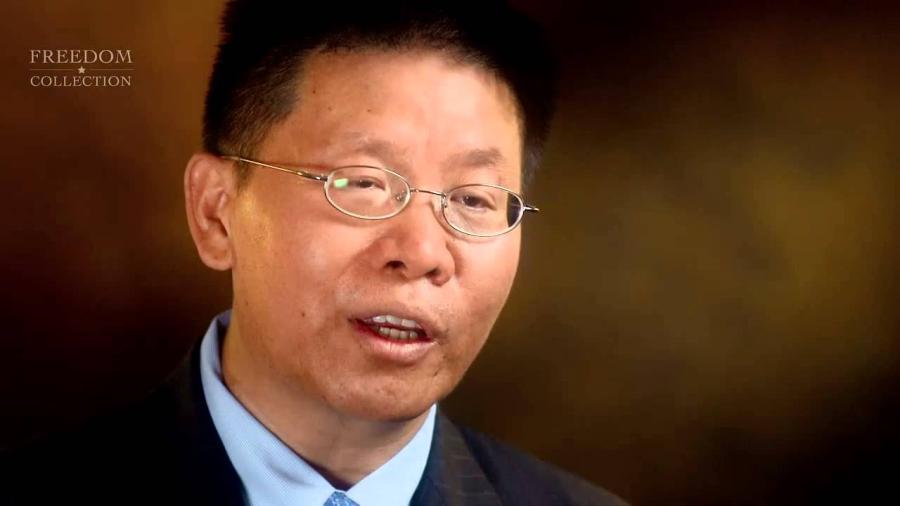
Another source of pressure abroad is the United Front Work Department (UFWD). Ben-Ur notes that in 2018 China restructured its apparatus of religious regulation to give the UFWD control of the State Administration for Religious Affairs, which governs religious practice in China. Beijing admitted that the merger was intended to strengthen the Communist Party’s “centralized, unified leadership over religious work.” The same 2018 restructuring also placedoverseas Chinese affairs under United Front oversight. Thus the party institution responsible for tightening control over religion at home is simultaneously responsible for significant portions of the country’s outreach to Chinese communities abroad, according to Ben-Ur. Bob Fu, a Chinese pastor who founded the religious freedom advocacy group ChinaAid in 2002, has testified that this dual role of China’s religious affairs organization is evident inside North American churches. In November 2025, according to Fu, Chinese consular officials and United Front-linked intermediaries had approached Chinese-speaking churches in the United States and Canada and pressured pastors to display PRC flags during China’s National Day, hold “patriotic” celebrations and sing “patriotic” songs before worship, avoid discussing persecution in China, and even allow pro-Beijing actors influence over church elder boards.
Ben-Ur writes that the Communist Party is not merely denying Christians’ religious freedom inside China but “is attempting to decide what Chinese Christians may preach, whom they may worship with, and what they may say about their faith after they reach Dallas, Washington, Seoul, or Bangkok.” He argues that the FBI should expand its work in classifying China’s coercion of religious minorities and threats as forms of transnational repression to engage in “discreet outreach to Chinese-language churches with substantial expat communities, whose congregants may be reluctant to report threats when relatives remain vulnerable in China.” China’s surveillance and interference in American religious affairs could also be seen in the U.S.-China Catholic Association’s (USCCA) cancellation, at the direction of Chinese officials, of a keynote address that was to take place at its conference at a Catholic university in Texas, which was supported by the Archdiocese of Houston. The speaker, Purdue University sociologist and critic Feng Gang Yang, said that his publications and research on China were the main reason for his cancellation, according to LifeSite News (July 31). Yang added that the incident shows the USCCA’s compliance with China’s transnational repression. “It is a shame that a U.S.-based Catholic organization has become part of China’s long-arm repression in the United States.” The USCCA board also removed its only member who opposed Sinicization, which calls for churches and other places of worship and religious teachings to reflect both Chinese culture and communist ideology.